

Two Houses, One Grid
What luxury fashion's biggest rivalry tells us about both brands' F1 ambitions

Gucci announced its Alpine F1 title partnership on May 27th, a little over week before the first-ever “Louis Vuitton Grand Prix de Monaco.”
PR teams at companies spending a rumored $150 million don’t accidentally schedule press releases for the week before a rival conglomerate’s biggest F1 moment of the year. I literally spit out my tea when I saw the announcement.
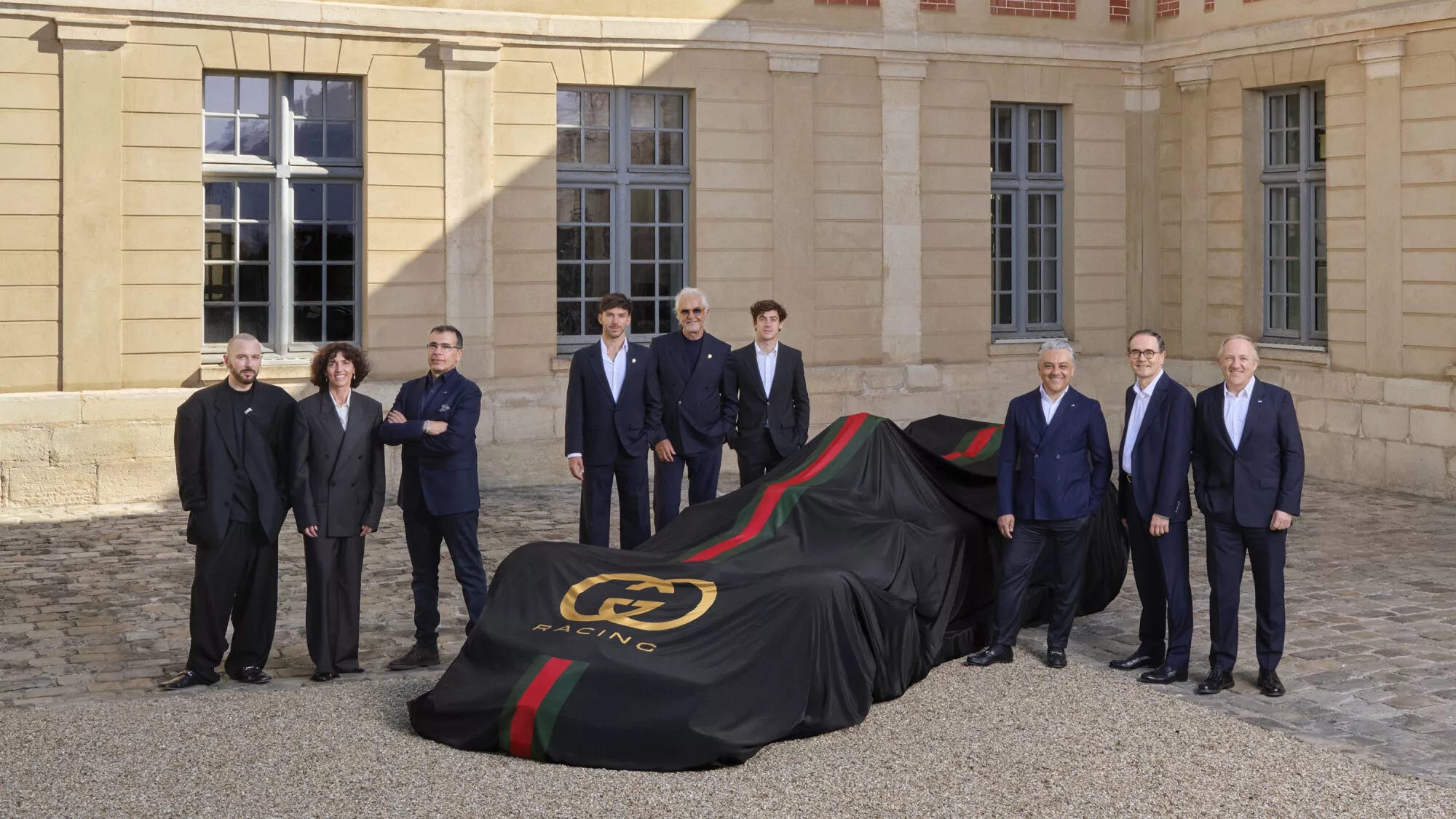
Not because it’s a surprise that two luxury fashion houses want to invest in F1. The audience aligns well with where they want to be. The sport reaches 1.5 billion viewers annually. Forty-two percent of its global fanbase is now female. Key races sit directly in luxury’s most important markets: Monaco, Singapore, Abu Dhabi, China.
But watching two French conglomerates settle an old score on the same grid is priceless.
A rivalry with long memory
To understand why this pairing matters, it helps to know that Kering really only exists because Bernard Arnault, CEO of LVMH, tried to take over Gucci in the 1990s and failed.
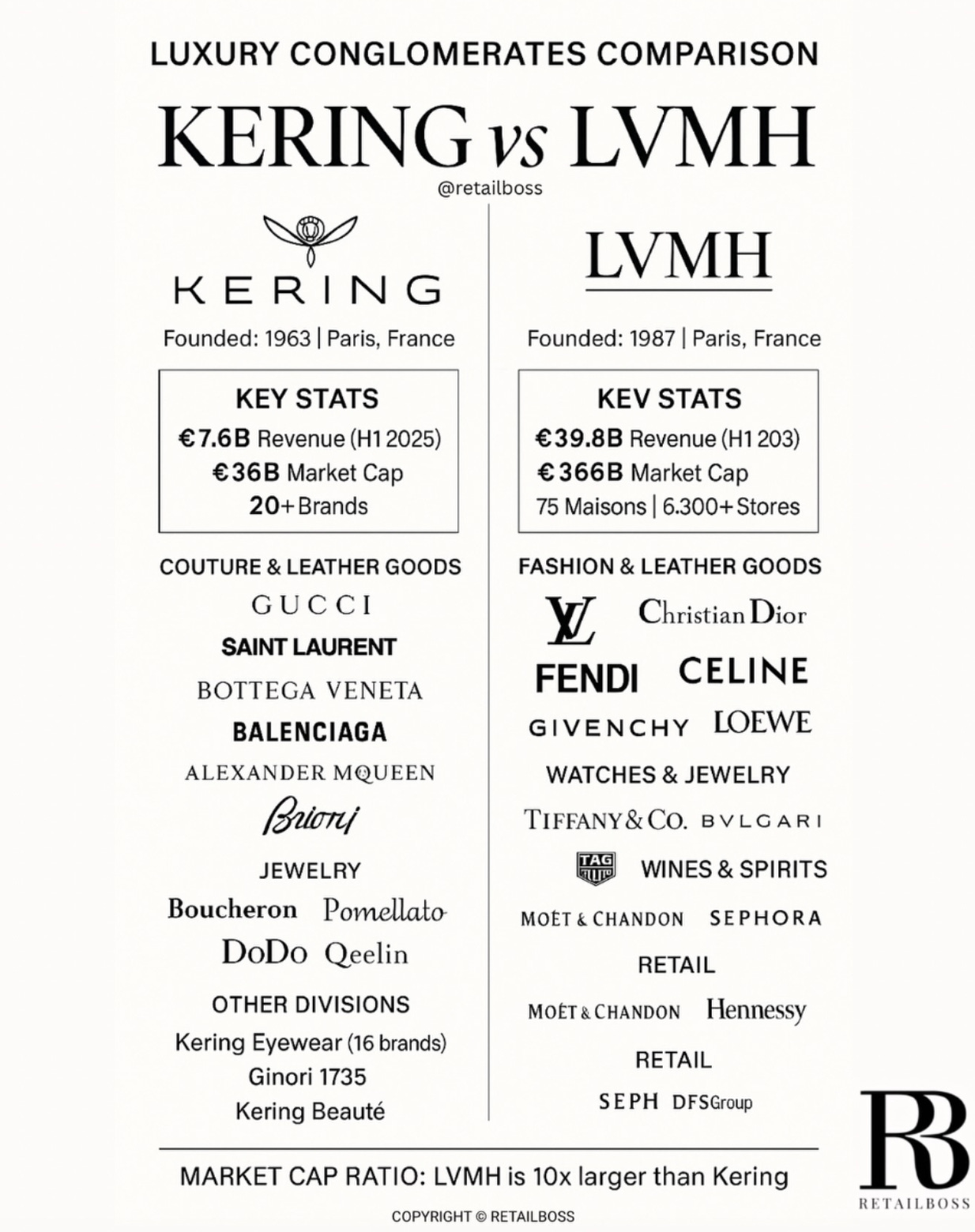
LVMH had been building a stake in Gucci. Gucci fought back and, desperate for a white knight investor, CEO Domenico De Sole was introduced to François Pinault, a French retail billionaire. Pinault put in $3 billion, took a 42% stake, and what started as a defensive move against Arnault became the foundation of what is today Kering, LVMH’s closest competitor.
LVMH eventually sold its Gucci stake for a €760 million profit. A financial win, but Arnault had wanted the brand. He didn’t get it.
Twenty-five years later, a Kering-owned Gucci-branded car will race laps around a LVMH-branded circuits.
LVMH’s approach
LVMH signed a $1 billion, 10-year global partnership with F1 in late 2024. The integration has been methodical. Moët & Chandon replaced Ferrari Trento as the official podium champagne. TAG Heuer dethroned Rolex as the official timekeeper. LV now has naming rights to both the Australian and Monaco Grands Prix. Sephora, also an LVMH company, is sponsoring F1 Academy and hosting Paddock Club glam bars.
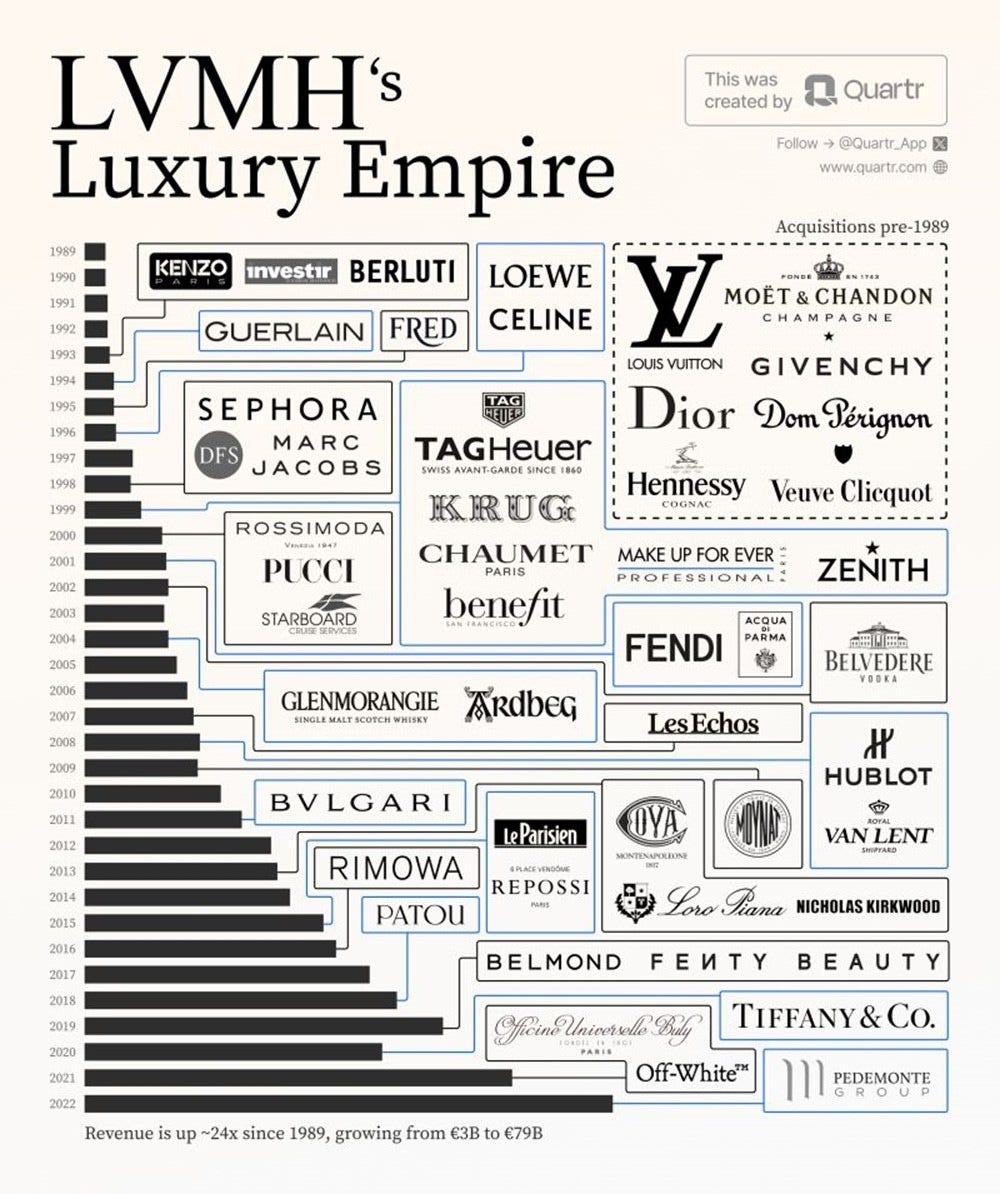
The footprint is broader than what most sponsors do. It touches the race names, the podium, the timekeeping, the retail ecosystem. LVMH is not attaching a single brand to a single team and hoping for the best.
The company spends upwards of $20 billion a year on marketing, and each brand is showing up in its own room of the same house, reinforcing the dream without competing with itself.
I highly recommend the Acquired podcast on LVMH if you haven’t yet listened.
LVMH is not in distress. The 10-year deal signifies a group that sees F1 as a long-term cultural home, rather than one that needs a quick relevance boost. Whether that confidence is fully warranted is a fair debate, especially as the luxury sector has had a rougher few years than the press releases let on. But the structure of their F1 presence, built across brands and race properties rather than concentrated in a single bet, reflects a patience that tends to hold up over time.
Kering’s entry point
Gucci’s situation is a different story, though the deal itself is not as random as it may seem on the surface.
Luca de Meo, an Italian, was Renault Group’s CEO for five years before leaving in mid-2025 to take over as Kering’s chief executive. Renault owns Alpine. So the man now running the group behind Gucci spent five years running the group behind the team Gucci is sponsoring. That’s a small world.
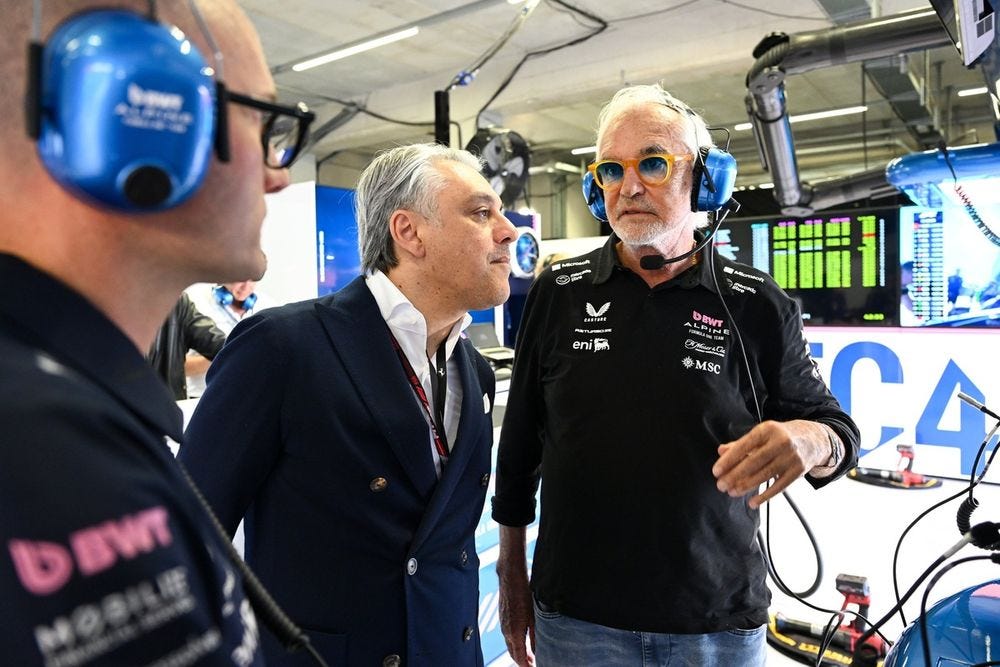
Then there’s Flavio Briatore, Alpine’s de facto team principal. He’s also Italian. He ran the Benetton F1 team — based in Enstone, backed by an Italian fashion house — from 1989 to 1997, winning back-to-back championships with Schumacher. After a Crashgate-induced lifetime ban was instated and then revoked (by a French court, no less), he is now running Alpine out of the same factory, with another Italian fashion brand on the car.
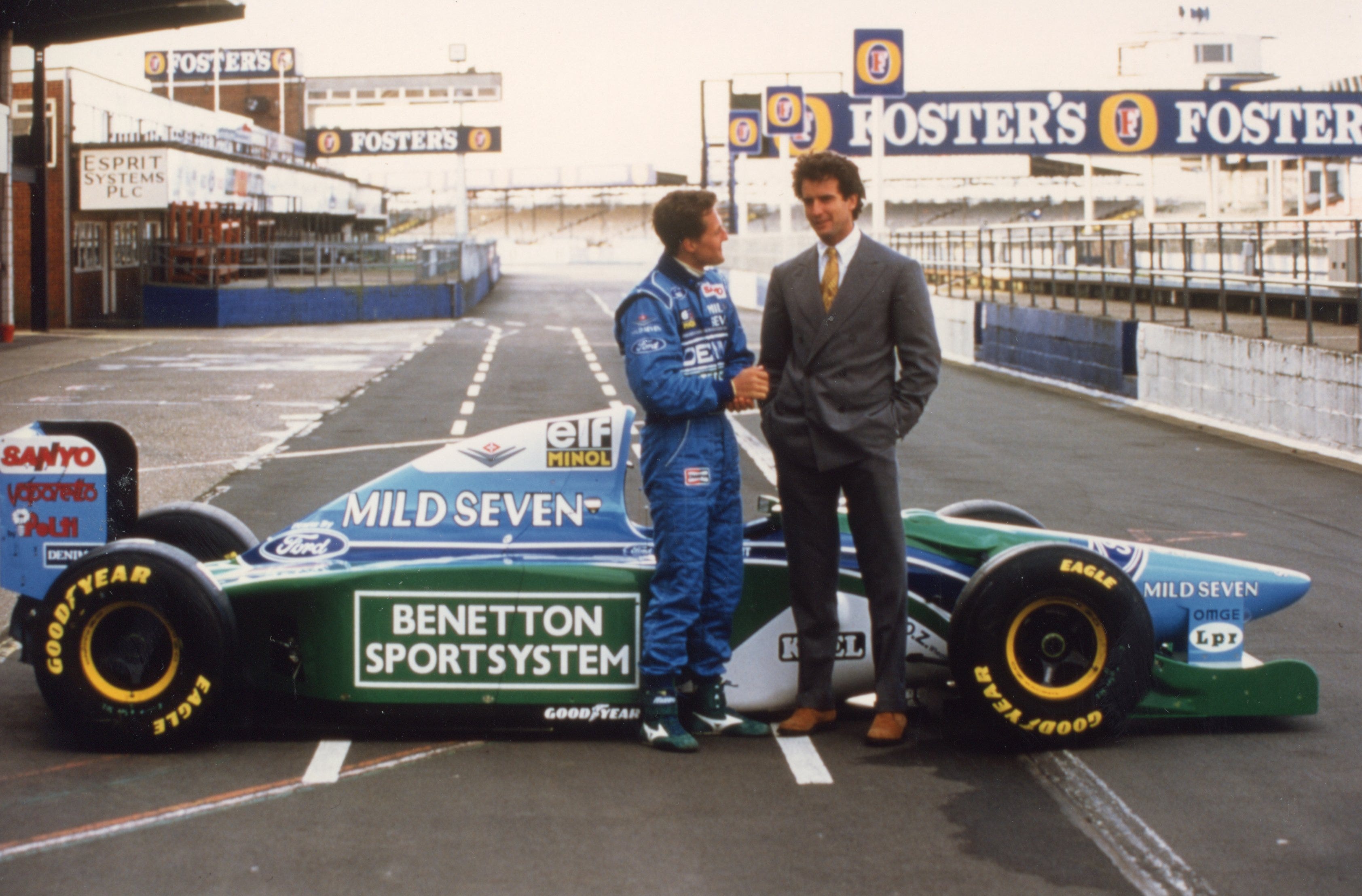
Whether these overlaps reflect strategic alignment or just a good story is open to debate. But the web of connections between two historically Italian fashion brands, an executive who bridged Renault and Kering, and a team built on the foundations of F1’s most famous fashion sponsorship is hard to dismiss as coincidence. Someone please buy the movie rights.
It sounds nice, but the problem is that Gucci is in distress. Revenue fell over 20% in 2025. Creative directors have come and gone. Kering’s stock is down roughly 60% over the past five years. Last year, Kering appointed Demna, formerly of Balenciaga, as Gucci’s new artistic director.
Against that backdrop, $150 million for an F1 title sponsorship is a brand revival bet, and a very public one.
The bet could pay off. Demna’s aesthetic, raw and culturally aggressive, has the potential to fit the energy of racing. Alpine has momentum around it: after finishing last in 2025, they are currently fifth in Constructors’. “Gucci Racing” as a visual concept has potential. Fashion houses, when they commit, can do extraordinary things.
The question is whether F1 visibility solves what is, at its core, a product and brand problem. The Acquired episode on LVMH has a line that keeps coming back to me: “You’re not selling a piece of leather. You’re selling a dream.” Logo placement doesn’t build that dream on its own. Story and product do.
Personally, I would’ve suggested a Kimi Antonelli sponsorship akin to what they’ve done with Jannik Sinner. Despite Gucci being French-owned, it is very much still Italian in its identity. What better story to own than an Italian teenager leading the championship?
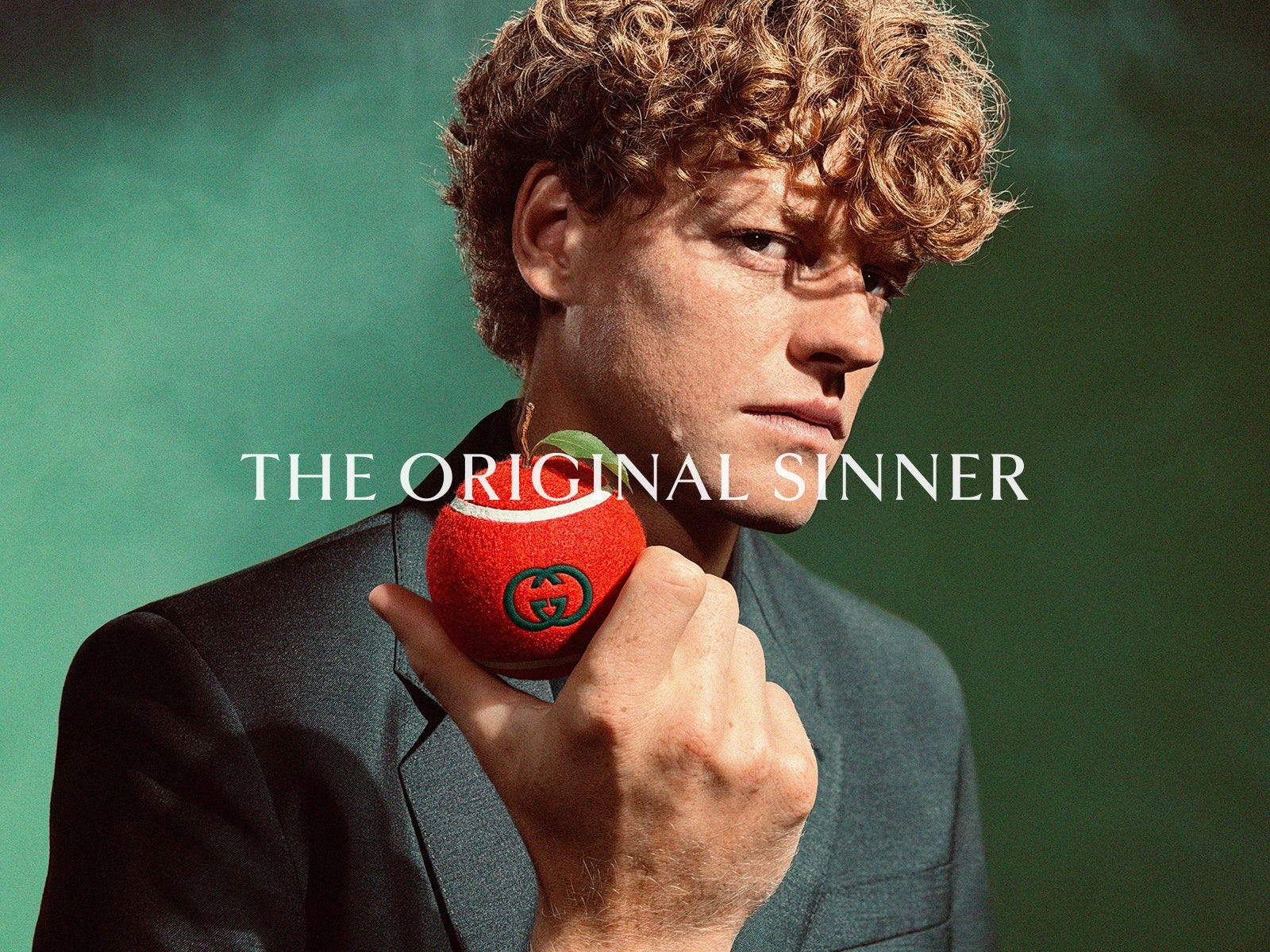
Can F1 visibility do what product and story ultimately should? Does F1 give Gucci the cultural reset it needs, or does the brand need to solve its problems before any sponsorship can stick? The answer isn’t obvious yet.
What do you think?
Thank you for reading! If you have topic requests or opinions to share, feel free to comment below or email hosts@itspaddockproject.com. For regular updates, follow Paddock Project on Instagram and TikTok.
You are the first person I’ve seen point out the announcement timing ahead of Monaco!! Yes!! (although maybe you & I are marketing nerds 🙈)